
California Lawyers Association
It’s What We Do: California Legal Pathways Collaborative Implements New Law Academy Partnership in San Gabriel Valley
Leadership – Access – Diversity. These are things which drive the California Legal Pathways Collaborative (CLPC). What began as six innovative law academies first established in 2010, today has exploded to 25 programs across the state, with the organization’s newest partnership project recently established with Pasadena High School.
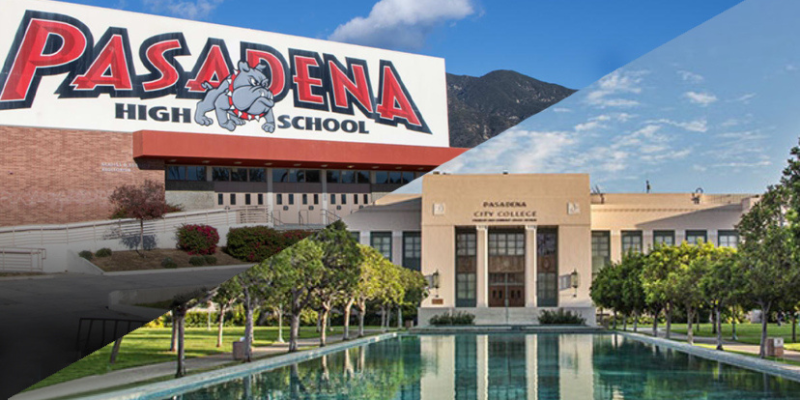
CLPC is the educational component of California Lawyers Foundation (CLF), the charitable arm of California Lawyers Association (CLA), the largest volunteer bar association in the state with 50,000 members. CLPC’s multi-year academic programs bring civics engagement, government, and the law to classrooms throughout California. Students learn directly from academic and legal professionals and are given special opportunities to meet with lawyers, judges and legislators, hear court cases, attend events, and experience firsthand an array of legal career opportunities.
CLPC founder and attorney, Ruthe Ashley, is delighted about the partnership with Pasadena High School. “We wanted to bring an academy to the San Gabriel Valley, and Pasadena High School is the perfect partner. The students are so enthusiastic, and when they speak about what it means to them to have this program, it touches your heart.”
Patricia Lee, CLPC Chair, agrees. “This is what CLPC does,” Lee says. “We bring the legal profession to the classroom. Our work with the California Lawyers Foundation gives us even greater opportunity to expand and be supported, and we look forward to continuing to bring additional academies to high schools in our state.”
Pasadena High School had an existing Law and Public Service (LPS) Academy for students interested in law, government, and public service careers. The LPS that CLPC is partnering with is one of eight long-term career and technical academies in the Pasadena Unified School District (PUSD). Pasadena High School sought to partner with CLPC to broaden its reach within the legal community, according to PUSD Work Based Learning Coordinator, Brian Biery. As the District’s career academy liaison, his role is to bring government agencies, nonprofits, and private businesses together to engage students in innovative ways. When he heard about CLPC’s successful work, he knew they could be beneficial to the school. When he heard Ashley speak about CLPC’s successful work at an educational symposium for school administrators and educators, he decided to approach the attorney to learn more.
“It was something spontaneous,” explains Biery. “I knew CLPC could be beneficial to our existing program, and I see this as a very positive step. Ruthe and CLPC have credibility in the legal field. She has already brought us together with judges, lawyers, the Los Angeles County Superior Court, local area law firms, the police and fire departments, and other legal professionals. We have a brand new Advisory Board, which includes judges and the Pasadena Deputy Chief of Police and Deputy Fire Chief. CLPC is helping us gain more support and make better connections for our enrichment activities. Without this program, the relationships our students would have with these professionals would be miniscule.”
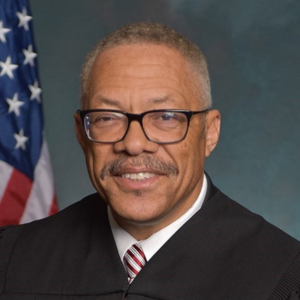
The Honorable David Cunningham, a judge of the Superior Court of Los Angeles County, has been an advocate for the CLPC law academies since their original establishment by Ashley. He is a key supporter of the law academy at Pasadena High School, so much so that he has agreed to serve as the CLPC Advisory Council Chair, despite his hectic trial schedule. “It’s a wonderful privilege,” he explains. I’ve had the opportunity to see young students at the high school level become members of the Bar. Their commitment and dedication has really influenced me.”
Cunningham became interested in the law himself from a young age. His grandfather was a minister and president of the National Association for the Advancement of Colored People (NAACP) in Memphis, working alongside Dr. Martin Luther King, Jr. during the civil rights movement. Cunningham’s father served on the Los Angeles City Council for more than a decade from the early 1970s until 1985.
“I used to talk to my grandfather as a child about civil rights and voting rights,” the judge recalls fondly. “I have to confess that we had lively conversations. Growing up, everyone in my family was very opinionated.” The examples set by his family led Cunningham to attend New York University (NYU) School of Law, graduating in 1980. He remains actively involved and is a member of the university’s alumni board, as well as serving on other committees.
“I think that success professionally on the individual level is driven by individual motivation,” he shares. “You have to have the idea planted in your mind. CLPC gives students a plan and helps them to execute it. The people who mentor students empower them to believe that they can do it.”
Cunningham continues, “For most young people, they need to see themselves in a role. They learn that they have to study and be trained. I tell students to read with as much veracity as they can, to write as much as they can, and to learn how to express themselves. That’s one of the most valuable talents. That’s what law does for you. You learn to engage in a structured environment.” He also believes it is crucial that students understand the link between the law and everyday life. “Students say they want to help in their communities, so we connect them to people who can tell them about real issues. For example, how does environmental law impact climate concerns? How are business disputes or consumer issues resolved?”
In addition to assisting students directly, CLPC offers important tools for teachers. “Our teachers are connected to resources like workshops and virtual meetings,” Biery says. “It also grows their network to engage with educators around the state operating law academies. This is very new and we will see how out partnership manifests itself, but we are bringing a tangible, tactile experience to students. Together, we are humanizing the career experience.”
Approximately 90% of students attending schools in the PUSD are considered underrepresented. Biery notes that when students meet people in positions of power firsthand, the relationships they build make a big difference. “We are very, very lucky because of the community we have,” shares Biery. “Having CLPC to help coordinate makes it so much easier for teachers and student to be involved.”
Judge Cunningham tells students that they are being exposed to a world of opportunity when they come to the academy. He shares his personal story about being both academically and public service driven. That motivation resulted in Cunningham being the recipient of NYU’s prestigious Root-Tilden-Kern Scholarship, established in 1951, and considered the nation’s premier public service scholarship. “It is a merit based scholarship,” explains Cunningham. “It paid my full tuition. That’s an important element that I use in the law academies. I identify students that are public service oriented and share what it means to be involved in political endeavors, or to write articles, or to volunteer. There are so many mechanisms to help them, and I try to point them in that direction so that they can fulfill their dreams. There is nothing like knowing that you helped a young person get into college and then law school and to become a lawyer. We are extending the ladder so other people can climb it.”
While the law academies are focused on upward mobility, those involved in the program also emphasize that they listen to students in terms of the opportunities they are seeking. “The ultimate goal isn’t necessarily to be a lawyer,” Cunningham says. “There are many other roles including law enforcement, being in a courtroom as a law clerk, or legal support staff.
Both CLPC and Pasadena High School recognize that the new Advisory Board is essential. “These are busy people,” Biery acknowledges. “Students see the board members and it gives them a sense of self-worth and knowing that people in the legal profession care about them and their futures.” He goes on to say that the students who participate in the law academy are very bright and that education, mentorship, and internship opportunities are all things which will help them get into college.
More than 3,100 students participate in the CLPC law academies statewide, with most going on to pursue a higher education. It is important to the organization that the academies are provided in large metropolitan areas, as well as smaller communities. CLPC and CLF want to bring added values, relationships and resources to benefit California’s schools and students. CLF recently awarded more than $50,000 in scholarships to students attending high school, undergraduate, and law school programs, funded by generous individuals who are concerned about providing an educational pathway for students from diverse backgrounds who hope to have a career in the legal field.
“We want to continue to expand our academies to involve as many students as possible,” Ashley shares. “Regardless of the size or location of their high schools, we hope educators will reach out to us and explore the possibility to bring an academy to their students.”
Learn how to bring the CLPC law academy program to your school.